
Gutter Company In Plantation, FL
Plantation’s roots as agricultural and nursery land left it with some of the densest, most mature tree canopy in Broward County, and that canopy shapes drainage decisions here more than almost anywhere else in our network. Established neighborhoods like Jacaranda face genuine root-intrusion risk to underground drainage lines. Plantation Acres’ larger lots need individually assessed grading. And properties along the New River and C-13 canal corridor face their own water table considerations. We identify which condition applies before recommending anything.
Mature Canopy Neighborhoods
Jacaranda, Plantation Gardens, and other established areas with decades-old jacaranda, oak, and ficus trees. Root systems from trees this size can invade underground drainage lines, and canopy debris load is heavier and more continuous than younger landscaping.
Plantation Acres & Western Large-Lot Properties
Larger residential lots with more unimproved or semi-graded land between the house and the property line. Discharge planning is assessed per-lot rather than assumed from a standard suburban template.
New River / C-13 Canal Corridor & Historic Core
Properties adjacent to the New River and C-13 canal system, plus the small historic core near Broward College with the city’s oldest construction and hardware.
Why Jacaranda and Plantation Gardens Need Root-Aware Drainage Design
Plantation’s roots as an agricultural and nursery community have left it with one of the densest mature tree canopies in Broward County. Neighborhoods such as Jacaranda, Plantation Gardens, and other established communities are lined with decades-old jacaranda, live oak, and ficus trees that provide shade and character but also create unique drainage challenges. Unlike newer subdivisions with younger landscaping, these mature trees have extensive root systems that extend far beyond the visible canopy.
Those roots naturally seek out moisture and can infiltrate underground drainage lines through joints, fittings, or small openings over time. Once inside the pipe, roots gradually restrict water flow, allowing debris to collect until the drainage system loses capacity or becomes blocked. This is a common long-term maintenance issue in older, heavily wooded neighborhoods and one that should be considered during the initial design of any underground drainage system.
For properties with mature tree canopy, we evaluate the location of major root zones before planning underground drainage. Where possible, we route piping away from large trees and use durable, root-resistant materials and connection methods that help reduce the risk of future intrusion. Designing the system around the property’s landscape from the start provides more reliable long-term performance than installing the same drainage layout used on lots without mature trees.
Why a Twice-Annual Cleaning Schedule Often Isn’t Enough Here
Large, established jacaranda, oak, and ficus trees don’t shed debris in the same concentrated seasonal pattern that younger or smaller landscaping does. Jacarandas drop both their distinctive purple blossoms in spring and substantial leaf litter through other parts of the year, while mature oaks and ficus contribute a steady, near-continuous load of leaves, seed pods, and small branches.
Properties in Plantation’s mature-canopy neighborhoods typically need a third cleaning added between the standard pre-hurricane-season and post-fall visits, specifically to prevent inlet clogging during the months when debris accumulation is heaviest but wouldn’t otherwise be addressed by a twice-annual schedule built around a lighter-canopy assumption.

Why a Bigger Lot Doesn’t Mean a Simpler Drainage Plan
Plantation Acres, in western Plantation, has meaningfully larger residential lots than most of the city’s eastern neighborhoods, with more unimproved or semi-graded land extending from the house toward the property line. Intuitively, more open space might suggest drainage is less of a concern — in practice, larger lots often have multiple lower-lying areas that collect water somewhat independently, rather than a single well-defined path draining toward one edge of the property.
We assess lot grading individually on Plantation Acres properties rather than applying a standard suburban-lot discharge plan, since assuming a smaller lot’s drainage logic on a larger, less uniformly graded property can miss a low point that ends up collecting water regardless of how well the gutter system itself performs.
Why Canal-Adjacent Plantation Properties Face a Separate Drainage Consideration
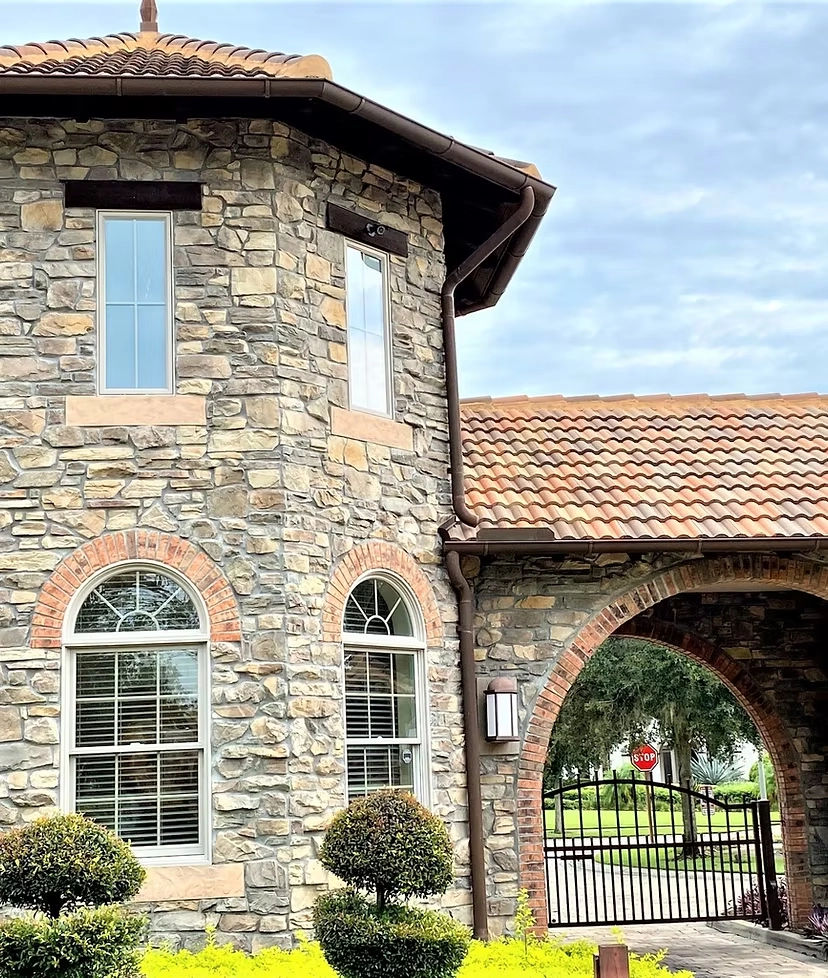
Sections of Plantation are adjacent to the New River and the C-13 canal system, both of which are managed waterways rather than natural, unregulated drainage. Properties directly adjacent to these waterways can experience reduced percolation capacity for gutter discharge, particularly during wet season when the canal system is carrying higher volume than its baseline level.
This is a separate consideration from the mature-canopy root intrusion issue — a property can face either condition, both, or neither depending on its specific location relative to the canal versus the tree canopy. We assess both independently rather than assuming one implies the other.
Four Failure Patterns Most Common on Plantation Property Assessments
Mature canopy root intrusion, heavy continuous debris load, Plantation Acres’ large-lot grading variability, and New River/C-13 canal proximity each produce specific and identifiable conditions. These four account for the large majority of what we find on initial property assessments across the city.
Root-Intruded Drainage Lines
Underground drainage installations in Jacaranda and Plantation Gardens showing reduced flow capacity or blockage from mature tree root systems invading pipe joints over time.
Heavy Canopy Inlet Clogging
Downspout inlets in mature-canopy neighborhoods accumulating debris faster than a standard twice-annual cleaning schedule accounts for, due to near-continuous shedding from large established trees.
Plantation Acres Low-Point Pooling
Larger, less uniformly graded lots in western Plantation collecting water at independent low points not addressed by a standard single-path discharge plan.
Canal-Adjacent Foundation Saturation
Properties near the New River or C-13 canal experiencing reduced percolation capacity during wet season when the managed waterway is carrying higher volume.
Gutter and Drainage Services for Plantation and Broward County
Each service addresses conditions specific to Plantation’s mature canopy neighborhoods, Plantation Acres’ large lots, or the New River and C-13 canal corridor. We identify which apply to your property during the free estimate.
Plantation Neighborhoods and Broward County Communities We Serve
Canopy density, lot size, and canal proximity vary across Plantation. Knowing which zone a property sits in is the first step of every estimate visit.
Schedule a Plantation Estimate
We serve all Plantation neighborhoods and Broward County communities. Every estimate begins with zone identification — mature canopy, Plantation Acres large-lot, or canal/historic core — because the correct drainage recommendation differs meaningfully across the city. This assessment is included in the free estimate at no additional charge.
South Florida Office:
3625 NW 19th St, Lauderdale Lakes FL 33311
(954) 563-9384
How We Work in Plantation and Broward County
Canopy, Lot Size, and Canal Proximity — Assessed Together
Plantation’s mature tree canopy is a genuine asset to the city, but it changes how underground drainage has to be planned in a way that doesn’t apply to newer, less established neighborhoods. We identify canopy density and root zone extent before specifying drainage line routing and materials, rather than treating every underground installation the same regardless of what’s growing above it.
For Plantation Acres and other large-lot western properties, we assess grading individually, since a bigger lot often means multiple independent low points rather than a simpler single-path drainage picture. For properties near the New River or C-13 canal, we assess wet-season percolation separately from the canopy question. And for the historic core near Broward College, we check hardware vintage against current HVHZ standards.
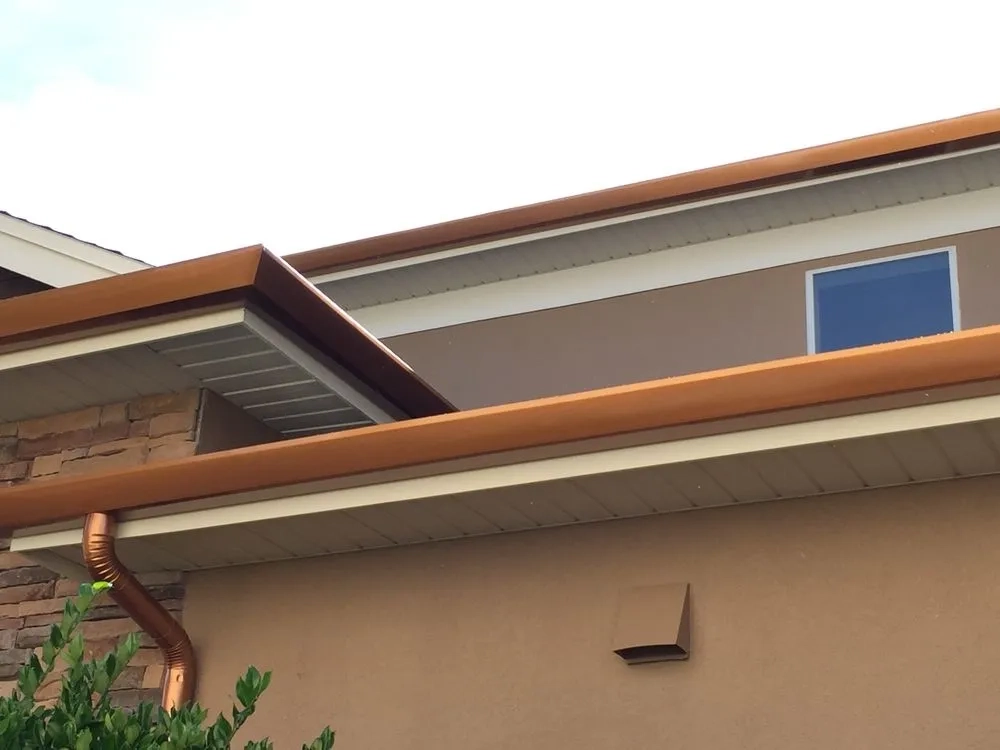
We fabricate seamless gutters on-site from continuous coil stock — no pre-cut section joints — with HVHZ-approved fastening applied consistently across every zone.
How We Work
From Estimate to Installation
Five steps between your free estimate and a correctly specified gutter system for your Plantation property.
Canopy & Zone Assessment
Canopy density, lot grading, and canal proximity determined first — these shape the drainage recommendation.
Roofline & Root Zone Analysis
Catchment area per run, known root zone mapping for underground drainage routing, hardware vintage review for historic-core properties.
Sizing & Discharge Spec
Gutter profile, downspout sizing, and discharge routing planned around root zones, lot grading, or canal proximity as applicable.
On-site Fabrication
Seamless gutters formed from continuous coil stock to your exact roofline dimensions — no pre-cut section joints.
Install & Flow Test
Gutters hung at calculated pitch with HVHZ-approved fastening, downspouts connected as specified, flow tested before the crew leaves.
Why Underground Drainage Under Mature Canopy Needs a Different Installation Approach
On a property with young or moderate landscaping, underground drainage installation follows a fairly standard process — dig the trench, lay the pipe, connect to the discharge point. Under Plantation’s decades-old jacaranda, oak, and ficus canopy, that same approach risks running the line directly through an active root zone, where roots will eventually find and exploit any joint or perforation in the pipe.
We map visible root zones and known tree locations before finalizing a trench path, use root-resistant pipe materials and jointing methods in these installations, and route around root-dense areas where the lot layout allows an alternative path. This adds a planning step that isn’t necessary on a newer or less densely planted property, but it’s the difference between a drainage line that lasts and one that needs to be dug up and replaced within a few years.
See our underground drainage page for system configuration detail.
Root-Resistant Drainage Lines
Underground drainage installed with root-resistant materials and routing for Jacaranda, Plantation Gardens, and other mature-canopy neighborhoods.
Canal-Adjacent Discharge Routing
Drainage systems designed around New River and C-13 canal wet-season percolation constraints.
Large-Lot Grading Assessment
Individual grading evaluation for Plantation Acres properties, identifying independent low points a standard discharge plan would miss.
Historic Core Hanger Replacement
Full hanger replacement at HVHZ-compliant spacing for Plantation’s original construction near Broward College.
Mature Canopy, Large-Lot, and Canal-Adjacent Gutter Systems in Plantation
Mature Canopy Residential
Jacaranda, Plantation Gardens, and Fig Tree Lane area — assessed for root-intrusion risk and heavy continuous debris load.
Plantation Acres & Large-Lot Properties
Western Plantation’s larger residential lots — assessed individually for grading and independent low points.
Canal-Adjacent & Historic Core
New River and C-13 canal-adjacent properties plus the historic core near Broward College.
What Plantation and Broward County Customers Say
Professionalism
The first home repair team in a long time that did what they promised and on time. I would recommend Hank’s. We had a whole house gutter and downspout replacement after the March hail storm in 2023.

Highly Recommended!
Dealt with Precision Gutters on a complex custom project, fixing an issue caused by a bad contractor. They worked tirelessly with me and went over every detail to help me come up with the best solution.
Premium Quality
Very professional and on time installation highly recommend thank you for your service!
Knowledgeable
I contracted Precision Gutters LLC to do the drainage for the gutters. They are professional, punctual, great attitude, knowledgeable, respectful personally.
I highly recommend Precision Gutters LLC as a company & their skills workers. Every message I sent to the Sales Representative Marc Marchand was answered in a timely manner & to the point.
Gutter Installation, Repair, Cleaning, and Drainage in Plantation
Frequently Asked Questions — Plantation Gutter Services
Why do root systems matter for underground drainage in Plantation?
Plantation’s mature tree canopy, especially in neighborhoods like Jacaranda, means decades-old root systems that can invade and constrict underground drainage lines over time. We route around known root zones where possible and use root-resistant pipe materials in these installations.
Do Plantation Acres properties need a different drainage approach than eastern Plantation?
Yes. Plantation Acres has larger, less uniformly graded lots that can have multiple independent low points rather than a single drainage path. We assess grading individually on these properties rather than applying a standard suburban-lot plan.
How does the New River and C-13 canal system affect drainage in Plantation?
Properties adjacent to these managed waterways can experience reduced percolation capacity, particularly during wet season. This is assessed separately from mature-canopy root intrusion, since a property can face either condition, both, or neither.
Does Plantation fall under the same HVHZ code as Fort Lauderdale and Miami?
Yes. Broward County, including Plantation, follows HVHZ provisions alongside Miami-Dade. Gutter hangers need product approval documentation regardless of a property’s location within the city.
Is there an older, historic part of Plantation with different gutter needs?
Yes, concentrated near Broward College and the older sections of the city developed from the 1950s through 1970s. This area carries hardware predating current HVHZ code. Newer construction elsewhere generally meets current code.
How often should gutters be cleaned in Plantation?
Most properties benefit from cleaning twice annually — before hurricane season in May and again in late fall. Mature-canopy neighborhoods like Jacaranda typically need a third mid-summer cleaning due to heavier, more continuous debris shedding.
What’s the difference between gutter repair and full replacement?
Repair addresses isolated issues on an otherwise sound system. Replacement is typically more cost-effective when multiple failure points appear concurrently, more common in Plantation’s older historic-core neighborhoods.
Do you serve commercial properties along Broward Boulevard and University Drive?
Yes. Commercial buildings along Plantation’s main corridors are assessed individually for roof catchment area and HVHZ product approval requirements rather than scaled up from a residential specification.
Other Cities We Serve Near Plantation
Precision Gutters serves communities throughout Broward County and the broader South Florida region. Each has distinct canopy, lot-size, and canal conditions that shape the correct gutter specification.
Stop Water Problems Before They Reach the Foundation
Plantation’s mature canopy neighborhoods, Plantation Acres large lots, and New River/C-13 canal corridor each demand a different piece of the specification. A Jacaranda property needs root-aware underground drainage. A Plantation Acres home needs individual grading assessment. A canal-adjacent or historic-core property needs its own drainage and hardware evaluation. Every project needs HVHZ-compliant fastening.
Free estimates include all of these assessments before we recommend anything.
Other Florida Locations