
Gutter Company in Sunrise, FL
Sunrise has three genuinely different roof-drainage conditions inside one city. The Sawgrass Mills and Sunrise Boulevard commercial corridor is dominated by large flat-roof retail and entertainment buildings that drain through internal roof drains, not gutters. Sunrise Lakes and similar condo communities have flat or low-slope roofs maintained as common elements by the association, not individual owners. And the city’s established single-family neighborhoods have standard pitched-roof gutter needs. We identify which applies before recommending anything.
Sawgrass Mills & Commercial Corridor
Large-format retail and entertainment buildings along Sunrise Boulevard and the Sawgrass Expressway interchange. Flat and low-slope roofs drain through internal roof drains and perimeter scuppers, not gutters — the engineering concern is ponding, not overflow.
Sunrise Lakes & Condo Communities
Flat or low-slope roofs maintained as common elements by the condo association rather than individual unit owners. Repairs require board approval and often multi-unit access coordination — a different process than a single-family estimate.
Established Single-Family Neighborhoods
Springtree, Welleby, and Sunrise Golf Village — standard pitched-roof construction with the hip-roof valley overflow condition common across Broward’s suburban developments.
Why Sawgrass Mills Corridor Buildings Don’t Use Gutters at All
The large retail, entertainment, and commercial buildings along the Sawgrass Mills and Sunrise Boulevard corridor are designed very differently from residential properties. Instead of sloped roofs that channel water into perimeter gutters, these buildings typically use flat or low-slope roofing systems with internal roof drains positioned across the roof surface. Perimeter scuppers serve as secondary or emergency overflow outlets, creating a drainage system that functions very differently from a traditional residential gutter installation.
Because water is collected through roof drains rather than gutters, the primary concern is roof ponding, not gutter overflow. During South Florida’s intense rainstorms, water can accumulate faster than the roof drains are able to remove it. Standing water adds significant weight to the roof structure, increases stress on the roofing membrane, and can accelerate deterioration around drains, seams, and low spots if the drainage system is undersized or partially blocked.
For commercial properties in the Sawgrass Mills corridor, we evaluate each building’s roof area, drain layout, scupper capacity, and overall drainage design rather than applying residential gutter standards to a commercial roof system. By assessing how the roof is intended to shed water, we can identify capacity limitations before they contribute to ponding, leaks, or long-term structural issues.
How Wind-Load Code Applies Differently to Drains Versus Gutters
Broward County’s HVHZ requirements apply to Sunrise’s commercial buildings just as they do to single-family homes, but the specific product approval pathway differs by structure type. For flat-roof commercial buildings, the relevant wind-load and product-approval considerations center on the roofing membrane system, drain fittings, and scupper construction rather than gutter hanger spacing, since there’s no exposed gutter hardware to secure against wind uplift the way there is on a pitched residential roof.
We assess commercial flat-roof drainage systems on their own terms rather than translating residential HVHZ fastening requirements onto a structure where they don’t apply the same way.

Why a Sunrise Lakes Repair Isn’t the Same Process as a Homeowner Estimate
In most condominium communities, including the buildings that make up Sunrise Lakes, the roof and its drainage system — whether flat commercial-style roofing or a low-slope built-up system — are common elements maintained by the condo association rather than any individual unit owner. This changes the entire process: authorization comes from the association board rather than a single homeowner signing off, and physical access for repair work often needs to be coordinated across multiple units or an entire building wing rather than a single property line.
We work directly with property managers and association boards on these projects, providing the assessment documentation and reports these boards typically need before authorizing common-element repair work — a genuinely different engagement than a single-family residential estimate, even when the underlying drainage problem is conceptually similar.
Why Homes in Springtree and Welleby Overflow at One Specific Point
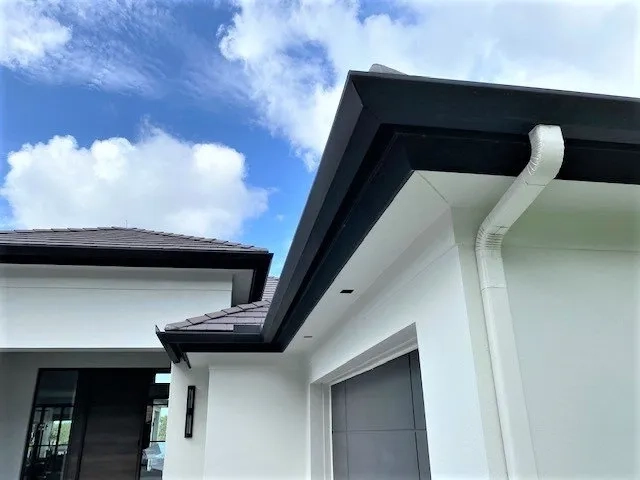
Sunrise’s established single-family neighborhoods have hip-roof floor plans common to Broward suburban construction, and builder-grade gutters here are sized for an average roof plane rather than the valley convergence points these floor plans create. During peak-intensity storms, combined flow from two roof planes at a valley exceeds a standard 5-inch section’s capacity.
This produces overflow localized to one specific point on the roofline — the diagnostic marker of a valley capacity issue rather than a general system failure. The correction is targeted: upsizing the section at the valley to 6 inches and adding a dedicated outlet beneath the convergence point.
Four Failure Patterns Most Common on Sunrise Property Assessments
Flat-roof commercial ponding, condo common-element coordination gaps, single-family roofline geometry, and canal-adjacent percolation each produce specific and identifiable conditions. These four account for the large majority of what we find on initial property assessments across the city.
Flat-Roof Ponding at Blocked Drains
Commercial buildings along the Sawgrass Mills corridr with debris-blocked internal roof drains, allowing water to pond on the membrane rather than clearing through the intended drainage path.
Deferred Condo Common-Element Repairs
Sunrise Lakes and similar buildings where drainage issues persist because repair authorization requires association board approval that hasn’t been sought or completed.
Single-Family Valley Overflow
Hip-roof homes in Springtree and Welleby overflowing specifically at valley convergence points where builder-grade gutters weren’t sized for combined roof-plane flow.
C-11 Canal-Adjacent Saturation
Western Sunrise properties adjacent to managed C-11 basin canals experiencing reduced percolation capacity for gutter discharge during wet season.
Gutter and Drainage Services for Sunrise and Broward County
Each service addresses conditions specific to Sunrise’s commercial corridor, condo communities, or established single-family neighborhoods. We identify which apply to your property during the free estimate.
Sunrise Neighborhoods and Broward County Communities We Serve
Roof type, ownership structure, and canal proximity vary across Sunrise. Knowing which zone a property sits in is the first step of every estimate visit.
Schedule a Sunrise Estimate
We serve single-family homes, condo associations, and commercial properties throughout Sunrise. Every estimate begins with identifying roof type and ownership structure, since a Sunrise Lakes condo repair, a Sawgrass Mills corridor commercial assessment, and a Springtree homeowner estimate each follow a different process. This assessment is included in the free estimate at no additional charge.
South Florida Office:
3625 NW 19th St, Lauderdale Lakes FL 33311
(954) 563-9384
How We Work in Sunrise and Broward County
Roof Type and Ownership Structure First
Sunrise is unusual in our network for how much its drainage needs vary by structure type rather than just geography. A Sawgrass Mills corridor building needs flat-roof drain and scupper engineering entirely distinct from a residential gutter system. A Sunrise Lakes condo needs common-element coordination with a property manager or board, not a homeowner conversation. A Springtree single-family home needs standard hip-roof valley assessment. We identify which of these applies at the very start of the process, since it changes not just the technical work but who we’re working with.
For commercial and condo properties, we provide the documentation property managers and boards typically need for repair authorization. For single-family homes, we follow the same estimate-to-installation process used throughout our Broward County service area. For western canal-adjacent properties, we assess C-11 basin proximity independently of roof type.
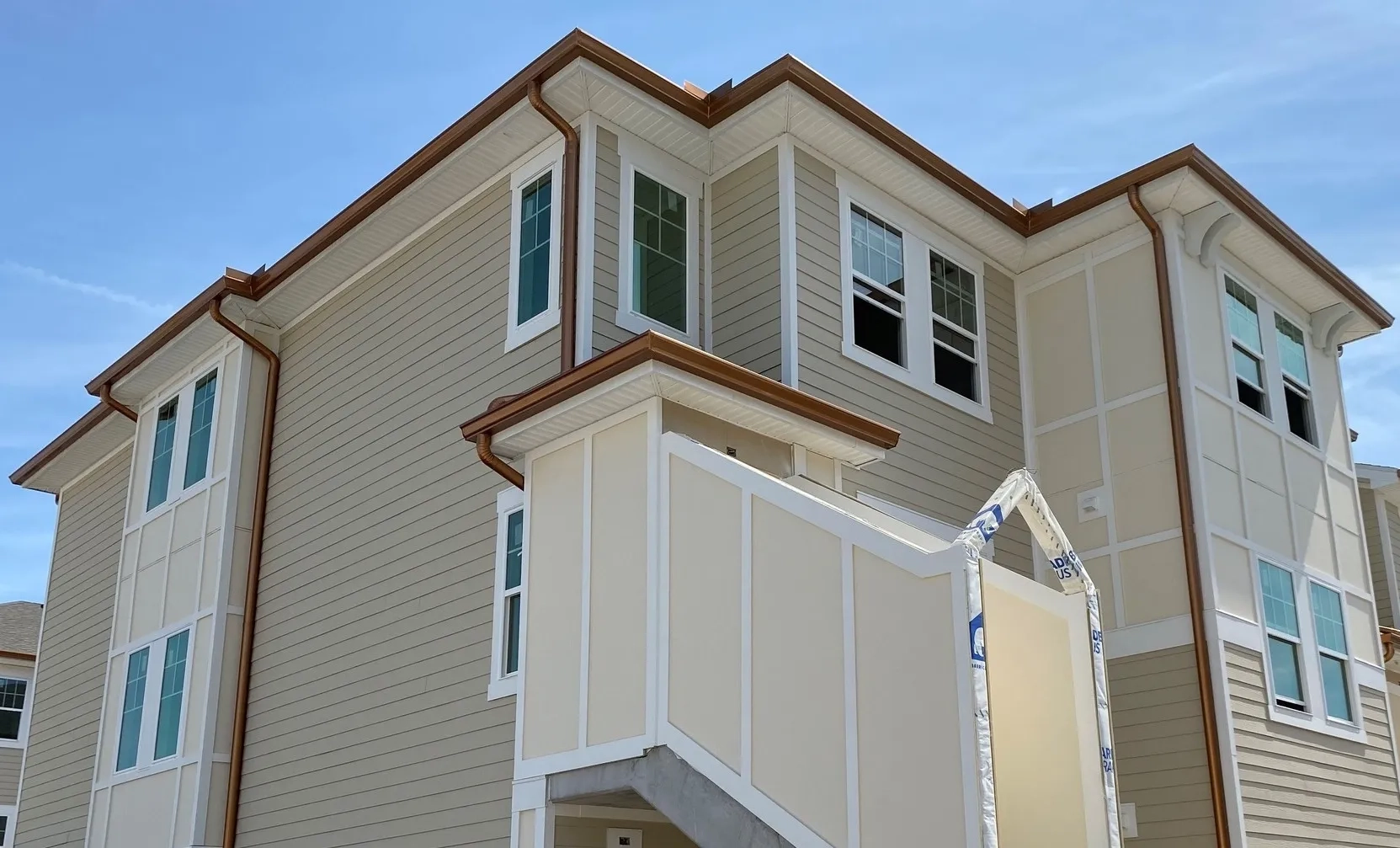
We fabricate seamless gutters on-site for single-family homes and assess flat-roof drainage systems on commercial and condo buildings using the appropriate engineering framework for each — not a one-size-fits-all approach across structure types.
How We Work
From Estimate to Installation
Five steps between your free estimate and a correctly specified system for your Sunrise property.
Roof Type & Ownership Assessment
Flat commercial, condo common-element, or single-family pitched roof determined first — this changes the entire process.
Drainage or Roofline Analysis
Drain and scupper capacity for flat roofs, or catchment area and valley identification for pitched roofs.
Sizing & Documentation
Gutter or drainage spec finalized, with board-approval documentation prepared for condo and commercial properties.
Fabrication or Drain Service
Seamless gutters fabricated on-site for single-family homes; drain and scupper service scheduled for flat-roof properties.
Install & Flow Test
System installed or serviced to spec, with flow tested before the crew leaves — HVHZ-approved fastening applied where relevant.
Why a Flat-Roof Framework Doesn’t Translate to a Pitched-Roof Home, and Vice Versa
A single-family home in Springtree or Welleby has a straightforward drainage path: sloped roof to gutter to downspout to ground-level or underground discharge. Applying standard hip-roof valley assessment and HVHZ hanger spacing here is the correct, well-established framework.
A flat-roof building along the Sawgrass Mills corridor doesn’t have gutters at all in the residential sense — water needs to reach an internal roof drain or perimeter scupper before it accumulates enough to cause ponding, and the engineering question is drain capacity and placement relative to roof area, not gutter sizing. A Sunrise Lakes condo building sits somewhere in between structurally, often with a similar flat or low-slope roof to the commercial buildings, but with a completely different ownership and authorization structure governing who approves and pays for the work.
Treating any of these three as interchangeable — recommending gutters for a flat commercial roof, or assuming an individual condo owner can authorize common-element repairs — leads to the wrong process even when the underlying water-management goal is the same. See our commercial gutters page for more on flat-roof drainage assessment.
Flat-Roof Drain & Scupper Service
Capacity assessment and clearing for internal roof drains and perimeter scuppers on Sawgrass Mills corridor commercial buildings.
Single-Family Valley Correction
Targeted 6″ valley section upsizing and dedicated outlets for hip-roof homes in Springtree, Welleby, and Sunrise Golf Village.
Condo Board Documentation
Assessment reports formatted for association board review and common-element repair authorization at Sunrise Lakes and similar communities.
C-11 Canal-Adjacent Drainage
Underground drainage routing for western Sunrise properties adjacent to managed canals with reduced percolation capacity.
Commercial, Condo, and Single-Family Drainage Systems in Sunrise
Sawgrass Mills & Commercial Corridor
Large-format retail and entertainment buildings — assessed for flat-roof drain and scupper capacity relative to roof area.
Sunrise Lakes & Condo Communities
55+ and multi-family condo buildings with flat or low-slope common-element roofs.
Established Single-Family Residential
Springtree, Welleby, and Sunrise Golf Village — standard pitched-roof gutter needs.
What Sunrise and Broward County Customers Say
Professionalism
The first home repair team in a long time that did what they promised and on time. I would recommend Hank’s. We had a whole house gutter and downspout replacement after the March hail storm in 2023.

Highly Recommended!
Dealt with Precision Gutters on a complex custom project, fixing an issue caused by a bad contractor. They worked tirelessly with me and went over every detail to help me come up with the best solution.
Premium Quality
Very professional and on time installation highly recommend thank you for your service!
Knowledgeable
I contracted Precision Gutters LLC to do the drainage for the gutters. They are professional, punctual, great attitude, knowledgeable, respectful personally.
I highly recommend Precision Gutters LLC as a company & their skills workers. Every message I sent to the Sales Representative Marc Marchand was answered in a timely manner & to the point.
Gutter, Drainage, and Flat-Roof Services in Sunrise
Frequently Asked Questions — Sunrise Gutter and Drainage Services
Do the large retail buildings near Sawgrass Mills need gutters the same way a house does?
No. These buildings typically have flat or low-slope roofs that drain through internal roof drains and perimeter scuppers rather than gutters. The engineering concern is ponding, not overflow, and we assess drain capacity relative to actual roof area rather than applying a residential gutter framework.
Who is responsible for gutter and roof drainage repairs in a Sunrise Lakes condo building?
In most Sunrise Lakes buildings, the roof and its drainage are common elements maintained by the condo association, not individual owners. Repairs typically require board approval and coordinated access across units. We work directly with property managers and boards on these projects.
Does Sunrise fall under the same HVHZ code as Fort Lauderdale and Miami?
Yes. Broward County, including Sunrise, follows HVHZ provisions alongside Miami-Dade. This applies to single-family gutter fastening and to commercial/condo flat-roof drain and membrane systems, though the specific product approval requirements differ by structure type.
Why does my gutter only overflow at one point on the roofline?
On single-family homes, that’s typically a valley convergence problem common in hip-roof floor plans. A standard 5-inch section is sized for a single roof plane, and a valley receives combined flow from two — exceeding capacity during peak storms. The correction is upsizing that section and adding a dedicated outlet.
Are Sunrise’s western neighborhoods near the Everglades affected by canal water levels?
Some western Sunrise properties sit within the C-11 canal basin, where managed water levels can reduce percolation capacity for gutter discharge, particularly during wet season. This is lot-specific, and we assess actual canal proximity during the estimate.
How often should gutters and roof drains be cleaned in Sunrise?
Single-family gutters benefit from cleaning twice annually — before hurricane season and in late fall. Flat commercial and condo roof drains need checking on a similar schedule, since a blocked drain creates ponding much faster than a clogged gutter causes overflow.
What’s the difference between gutter repair and full replacement?
For single-family homes, repair addresses isolated issues while replacement suits concurrent multiple failures. For flat-roof properties, the equivalent choice is between clearing/repairing drains and scuppers versus a larger re-roofing or drainage upgrade — a different scope and decision process.
Do you work with property management companies and condo associations in Sunrise?
Yes. We regularly work directly with property managers and association boards on Sunrise Lakes and similar communities, providing the documentation these boards typically need to authorize common-element repair work.
Other Cities We Serve Near Sunrise
Precision Gutters serves communities throughout Broward County and the broader South Florida region. Each has distinct roof-type, ownership, and canal-basin conditions that shape the correct gutter and drainage specification.
Stop Water Problems Before They Reach the Foundation
Sunrise’s commercial corridor, condo communities, and single-family neighborhoods each demand a different piece of the specification. A Sawgrass Mills corridor building needs flat-roof drain and scupper engineering. A Sunrise Lakes condo needs common-element coordination with the board. A Springtree home needs standard valley overflow correction.
Free estimates include all of these assessments before we recommend anything.
Other Florida Locations