
Gutter Company in Altamonte Springs, FL
Altamonte Springs is Seminole County’s most densely developed municipality — a built-out 9-square-mile city where the largest share of the residential housing stock was installed in the 1970s through 1990s and is reaching the replacement decision point simultaneously. Crane’s Roost Lake creates near-lake water table conditions on adjacent properties. The SR-436 corridor and multifamily communities require commercial-scale drainage assessment. We address all three conditions during a single free estimate visit.
Most of Altamonte Springs’ Residential Stock Was Built 30–50 Years Ago — and the Original Gutter Systems Reflect It
Loosened spike-and-ferrule hangers, 2×3 downspouts undersized for current rainfall intensity standards, and sectional joints opened through decades of thermal cycling are the three conditions we find most consistently on Altamonte Springs homes built between 1975 and 1995. When all three are present together, targeted repair is rarely the most cost-effective path.
HOA and Condo Communities Are the Largest Market Segment — With Different Maintenance Dynamics
Altamonte Springs’ high concentration of HOA-governed townhome, condo, and villa communities means gutter decisions are often made by boards rather than individual homeowners. HOAs typically discover failures through unit-owner interior reports rather than exterior inspections. We assess whole communities in a single scheduled visit and provide phased replacement plans that fit HOA reserve fund timing.
Why Altamonte Springs Has More Gutter Replacement Decisions Happening Simultaneously Than Any Other Seminole County City
Altamonte Springs experienced its largest period of suburban growth between the mid-1970s and early 1990s. Homes in Eastwood, Spring Valley, Newburyport, Sanlando Springs, the Forest City area, and surrounding neighborhoods were built during this era, meaning many now have gutter systems that are 30 to 50 years old. At this age, most systems have reached the point where a full condition assessment is more valuable than isolated repairs.
Three issues commonly appear together on these homes. Original spike-and-ferrule hangers loosen after decades of thermal expansion and contraction, allowing gutters to pull away from the fascia and hold standing water. Original 2×3 downspouts are often undersized for today’s rainfall intensity and roof catchment areas, while aging sectional gutter joints separate over time, creating persistent leaks along the runs.
When these conditions occur together, the right solution depends on more than the gutters themselves. We inspect fascia condition, hanger attachment points, joint separation, and overall system integrity during the estimate to determine whether targeted repairs, partial upgrades, or full seamless gutter replacement will provide the best long-term performance.
Why Condo Associations and Townhome HOAs in Altamonte Springs Experience Gutter Failures Differently
Altamonte Springs has one of the highest concentrations of HOA-managed communities in Seminole County. Along the SR-434 and Semoran Boulevard corridors, many townhomes, condominiums, villas, and apartment communities rely on HOA boards or property managers to oversee gutter maintenance. This creates a different maintenance cycle than owner-occupied homes, as gutter problems are often identified only after residents report interior water stains or moisture intrusion. By then, water has frequently been running behind the gutters for one or more wet seasons, increasing the risk of damage to fascia, stucco, or other exterior materials.
HOA planning also extends beyond replacing a single building. Boards need a clear understanding of gutter conditions across the entire community so repairs and replacements can be phased into reserve fund budgets rather than handled as emergency projects. We work with HOA boards and property managers to inspect multiple buildings during a single site visit, document each system’s condition, and provide phased replacement recommendations that align with long-term capital planning.
Near-Water Drainage Conditions in Altamonte Springs’ Two Riparian Zones
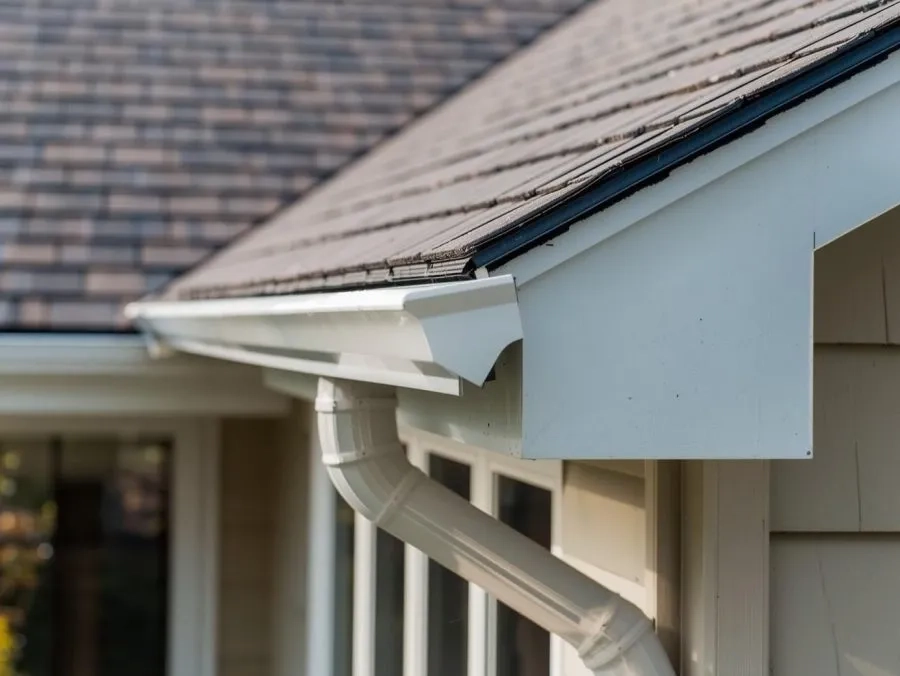
Altamonte Springs has two major water features that influence drainage on nearby properties. Crane’s Roost Lake, the centerpiece of the city’s regional park, is surrounded by condominiums, apartments, and commercial development. During the June through September wet season, rising lake levels elevate the surrounding water table, slowing drainage on nearby properties. Like Winter Park’s chain of lakes, Lakeland’s lakefront neighborhoods, and Sanford’s Lake Monroe corridor, homes within a few blocks of Crane’s Roost often benefit from underground drainage systems that move runoff farther from the foundation.
The Little Wekiva River creates similar conditions in western Altamonte Springs, including Spring Valley and Sanlando Springs. During the wet season, elevated groundwater reduces soil percolation on low-lying properties near the river. For many homes close to the floodplain, underground drainage provides more reliable water management than standard downspout extensions by directing runoff away from the foundation before it can accumulate.
Commercial Gutter Assessment Along Semoran Boulevard and the Altamonte Mall Area
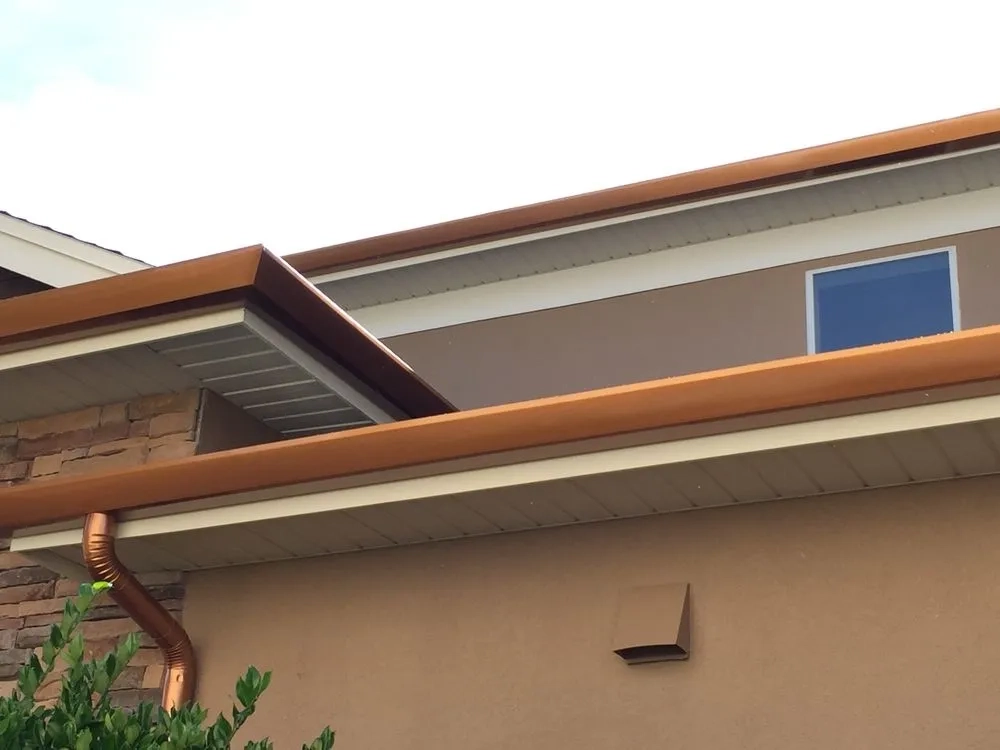
The SR-436 (Semoran Boulevard) corridor is one of Central Florida’s largest commercial districts, with retail centers, office parks, hotels, restaurants, and the Altamonte Mall regional complex. These buildings have roof catchment areas far larger than residential properties and require commercial gutter systems engineered for each building’s roof size, drainage layout, and discharge requirements rather than scaled-up residential designs.
Large retail and office buildings often generate runoff volumes that exceed the capacity of standard residential gutter systems, especially during Central Florida’s heavy summer storms. Many commercial properties also require integration with flat roofs, scuppers, or existing drainage infrastructure. We evaluate each commercial property individually, considering roof catchment area, drainage patterns, system condition, and discharge requirements to specify the right commercial gutter solution for the building.
Four Failure Patterns Most Common on Altamonte Springs Property Assessments
Altamonte Springs’ age-concentrated housing stock, HOA governance structure, near-lake and near-river drainage conditions, and SR-436 commercial scale produce specific recurring failure conditions. These four account for the large majority of what we find on initial assessments across the city.
Triple-Failure Pattern on 1975–1995 Homes
Loosened hangers, undersized 2×3 downspouts, and open sectional joints typically appear together on Altamonte Springs homes of this construction era — three conditions that each contribute to system underperformance and together indicate a system that has reached the end of its effective service life. Each can be repaired individually, but when all three are present the repair cost approaches replacement cost while leaving the system at continued risk from the remaining failure modes.
HOA Failure Discovery Lag
Condo and townhome association properties typically discover gutter failures through unit-owner interior complaints rather than exterior inspection — by which point the system has often been failing for one to two wet seasons. The moisture that has entered the wall or ceiling assembly during that period exceeds what is visible from the initial interior inspection. HOA assessments that document whole-community condition prevent this discovery pattern from repeating across successive units.
Near-Lake Saturation — Crane’s Roost and Little Wekiva Zones
Properties within two to three blocks of Crane’s Roost Lake and the Little Wekiva River corridor experience seasonal water table elevation that slows grade-level downspout discharge percolation during the wettest months of the wet season. Standard downspout elbows that work adequately in spring may leave water sitting against foundation edges for 60 to 90 minutes per storm event by August. Underground drainage routing resolves this condition on the lowest-elevation lots in both water-adjacent zones.
Commercial Undersizing on SR-436 Properties
Many retail and office buildings along the SR-436 corridor still rely on aging gutter systems or installations that were sized using residential specifications rather than commercial drainage requirements. During Central Florida’s heaviest storms, undersized systems can overflow, contributing to parking lot erosion, foundation saturation near entrances, and moisture intrusion along exterior walls. A commercial gutter assessment identifies the correct sizing and drainage design, addressing the underlying capacity issue instead of repeatedly repairing an undersized system.
Gutter and Drainage Services for Altamonte Springs and Seminole County
Each service addresses conditions specific to Altamonte Springs’ aging suburban housing stock, HOA governance structure, near-water drainage zones, or SR-436 commercial scale. We identify which apply to your property or community during the free estimate.
Altamonte Springs Neighborhoods and Communities We Serve
Housing age, HOA governance, proximity to Crane’s Roost or the Little Wekiva, and canopy density vary across Altamonte Springs’ neighborhoods. Each shapes the correct gutter specification and maintenance approach.
Schedule an Altamonte Springs Estimate
We serve all Altamonte Springs neighborhoods and surrounding Seminole County communities including Longwood, Casselberry, Maitland, Winter Springs, and Apopka. For HOA communities and multifamily properties, we coordinate with property managers and board representatives for community-wide assessment scheduling.
Orlando Office:
4677 LB McLeod Rd, Ste. B, Orlando FL 32811
(407) 203-1144
How We Work in Altamonte Springs
Aging Stock Assessment, Community-Wide HOA Surveys, and Near-Water Drainage — in a Single Market
Altamonte Springs requires different approaches for different property types. In neighborhoods such as Eastwood, Newburyport, and Spring Valley, we evaluate aging gutter systems on 1970s through 1990s homes to determine whether repairs, upgrades, or full replacement provide the best long-term value. For HOA-managed townhome and condominium communities along SR-434 and around Crane’s Roost, we perform community-wide inspections and develop phased replacement plans that support reserve fund budgeting. Along the SR-436 commercial corridor, we assess each building individually, calculating roof catchment area and drainage requirements rather than applying a standard commercial template.
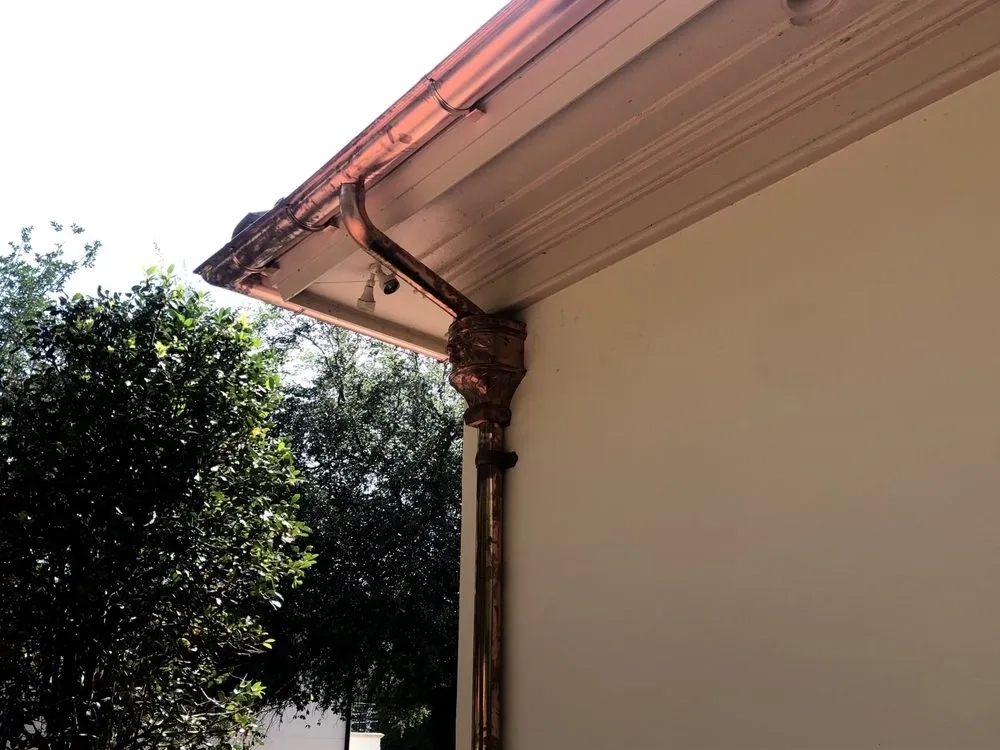
We fabricate seamless gutters on-site from continuous aluminum coil stock, eliminating the sectional joints that commonly fail on older systems. Each installation is designed with the proper slope, appropriately sized downspouts based on roof catchment area, and drainage planning that accounts for seasonal groundwater conditions near Crane’s Roost Lake and the Little Wekiva River. The recommendations developed during the estimate are carried directly to the installation team, ensuring every system is built specifically for the property’s needs.
How We Work
From Estimate to Installation
Five steps between your free estimate and a correctly specified gutter system for your Altamonte Springs property or community.
Property Assessment
Owner-occupied residential, HOA community, or commercial — determines assessment approach, scheduling coordination, and whether phased replacement planning applies.
System Condition Review
Hanger condition, joint separation, downspout sizing, and fascia deterioration assessed on aging systems. Repair vs. replacement determination based on actual condition findings.
Sizing & Drainage Spec
Gutter profile (5″ or 6″), downspout sizing (correcting 2×3 undersizing to 3×4 where warranted), outlet spacing, and discharge planning — including underground components for near-lake and near-river properties.
On-site Fabrication
Seamless gutters formed from continuous aluminum coil to exact roofline dimensions — no pre-cut section joints, eliminating the thermal-cycling joint failure common on aging sectional systems.
Install & Flow Test
Gutters hung at calculated pitch, downspouts connected to appropriate discharge points, flow tested before the crew leaves the property or building.
Crane’s Roost, Little Wekiva, and Why Standard Elbows Aren’t the Answer in Both Zones
Standard downspout extensions work well for most Altamonte Springs homes on higher, well-draining sandy soils. However, properties near Crane’s Roost Lake and the Little Wekiva River often experience seasonal water table rises that slow drainage during the wet season. As groundwater levels increase, runoff can remain near the foundation much longer than it does during drier months, increasing the risk of long-term moisture problems.
For these near-water properties, underground drainage systems with pop-up emitters or connections to approved stormwater infrastructure provide a more reliable solution by carrying runoff farther from the foundation. During every estimate, we evaluate soil conditions, seasonal groundwater, and drainage patterns at each downspout location to determine whether a standard discharge or an underground drainage system is the best fit. See our underground drainage page and downspout installation page for system configuration detail.
Crane’s Roost Discharge Runs
Underground pipe from downspout outlet to a pop-up emitter for condo and residential properties adjacent to Crane’s Roost Lake — routing discharge away from foundation perimeters during wet-season water table elevation.
Downspout Upsizing
Replacing original 2×3 downspout outlets with 3×4 sizing on 1970s–80s homes where original downspout capacity is undersized for the roofline’s actual catchment area by current rainfall intensity standards.
Little Wekiva Drainage
French drains and catch basins for Spring Valley and Sanlando Springs properties adjacent to the Little Wekiva floodplain — managing seasonal water table conditions in the western residential zone.
Community Drainage Plans
For HOA communities near Crane’s Roost, community-wide discharge assessment identifying which buildings need underground drainage and which grade-level elbows are adequate — enabling phased drainage investment across the community’s reserve plan.
Residential, HOA Community, and Commercial Gutter Systems in Altamonte Springs
Residential
Owner-occupied single-family homes across Altamonte Springs’ established suburban neighborhoods — the majority built 1975–1995 and reaching system replacement age simultaneously.
HOA & Multifamily
Townhome communities, condo associations, villa communities, and apartment complexes throughout the SR-434 corridor and Crane’s Roost area.
Commercial
Retail strip centers, office buildings, hospitality properties, and the Altamonte Mall area along SR-436 (Semoran Boulevard).
What Altamonte Springs and Seminole County Customers Say
Professionalism
The first home repair team in a long time that did what they promised and on time. I would recommend Hank’s. We had a whole house gutter and downspout replacement after the March hail storm in 2023.

Highly Recommended!
Dealt with Precision Gutters on a complex custom project, fixing an issue caused by a bad contractor. They worked tirelessly with me and went over every detail to help me come up with the best solution.
Premium Quality
Very professional and on time installation highly recommend thank you for your service!
Knowledgeable
I contracted Precision Gutters LLC to do the drainage for the gutters. They are professional, punctual, great attitude, knowledgeable, respectful personally.
I highly recommend Precision Gutters LLC as a company & their skills workers. Every message I sent to the Sales Representative Marc Marchand was answered in a timely manner & to the point.
Gutter Installation, Repair, Cleaning, and Drainage in Altamonte Springs
Frequently Asked Questions — Altamonte Springs Gutter Services
What gutter conditions are typical on 1970s–90s Altamonte Springs homes?
The large majority of Altamonte Springs’ residential housing stock was built from the mid-1970s through the early 1990s. Homes in this age range share a common set of gutter system conditions after 30 to 50 years in Florida’s heat environment: original spike-and-ferrule hanger installations that have loosened through thermal cycling, allowing gutters to pitch backward and pond against the fascia face; original 2×3 downspout outlets undersized for current rainfall intensity standards; and sectional gutter joints that have opened through age and thermal movement. When all three conditions appear together — which they typically do on homes of this era — the question of repair versus replacement requires a full system assessment rather than a blanket recommendation in either direction.
How does proximity to Crane’s Roost Lake affect nearby properties’ drainage?
Crane’s Roost Lake is the 44-acre centerpiece of Altamonte Springs’ regional park. During the June through September wet season, the lake level rises with rainfall accumulation and the water table in adjacent properties rises with it. For condo and residential properties within approximately two to three blocks of Crane’s Roost, grade-level downspout discharge that percolates adequately in dry conditions may sit against foundation or building perimeters for extended periods by August when the wet season water table is near its peak. Underground drainage systems that route discharge away from the foundation perimeter are the more reliable solution for the lowest-elevation lots in the Crane’s Roost-adjacent zone.
How should HOA boards approach gutter maintenance and replacement planning?
Altamonte Springs has one of the highest concentrations of HOA-governed residential properties in Seminole County. HOA boards typically discover gutter failures through interior reports from unit owners — water staining on a ceiling, moisture on an exterior wall — rather than through proactive exterior inspection. By the time interior symptoms appear, the system has typically been failing for one to two wet seasons. We work with HOA property managers and board representatives to assess whole communities in a single scheduled visit, documenting condition by building and providing phased replacement plans organized by condition priority and HOA reserve fund timing — enabling capital planning rather than emergency repair spending.
How does the Little Wekiva River affect drainage in Spring Valley and Sanlando Springs?
The Little Wekiva River runs through the western portion of Altamonte Springs, and residential neighborhoods adjacent to its floodplain — Spring Valley, Sanlando Springs, and the western residential areas — experience seasonal water table elevation during the June through September wet season. Properties within approximately two to three blocks of the Little Wekiva face reduced grade-level percolation during the wettest months, when the water table rises with the river level. Underground drainage routing resolves this condition on the lowest-elevation lots in the western residential zone — pop-up emitters in the turf zone or French drains that route water past the seasonally elevated water table to an appropriate discharge point.
Do commercial buildings on SR-436 need commercial-profile gutter assessments?
Yes. The SR-436 corridor contains retail strip centers, office buildings, hospitality properties, and the Altamonte Mall with roof catchment areas substantially larger than residential scale. Standard residential gutter profiles applied to commercial-scale rooflines undersize the system by a factor proportional to the roof area difference. We assess each commercial property individually for roof catchment area, drainage plan, and discharge requirements — calculating the correct commercial gutter profile, outlet spacing, and scupper integration where flat roofs with internal drains are involved. Residential spec applied at commercial scale is not a starting point for SR-436 corridor properties.
Are leaf guards worth installing in Altamonte Springs?
For properties in Spring Valley, Sanlando Springs, Eastwood, and other Altamonte Springs neighborhoods with significant live oak or pine canopy, micro-mesh guards are a cost-effective preventive measure. Standard screen guards are ineffective against fine live oak tassels, which pass through 1/8-inch openings and accumulate at downspout inlets regardless. Micro-mesh systems with fine enough openings to exclude live oak debris effectively reduce cleaning frequency from twice to once annually on high-canopy properties. For HOA communities maintaining multiple units, guards that reduce per-unit cleaning frequency meaningfully reduce the board’s recurring maintenance budget across the portfolio over a 5-to-10-year horizon.
What gutter sizing is correct for Altamonte Springs, and do original 1970s–80s systems meet current standards?
Altamonte Springs receives approximately 53 inches of annual rainfall concentrated into the June through September wet season, with peak storm events delivering 2 to 3 inches per hour during Central Florida afternoon convective cells. The correct minimum specification for most Altamonte Springs residential rooflines is a 5-inch K-style gutter with 3×4 downspouts at intervals no wider than 30 feet. Original gutter systems installed in the 1970s and 1980s typically used 4-inch profiles and 2×3 downspouts — specifications designed for lower rainfall intensity assumptions. These original systems are functionally undersized by current standards for most of the homes they serve, which is one of the reasons these aging systems overflow during peak wet-season storms even when the gutters appear structurally sound.
Does Precision Gutters serve multifamily and apartment communities in Altamonte Springs?
Yes. We install and service gutter systems on apartment communities, condominium buildings, townhome complexes, and villa communities throughout Altamonte Springs and the surrounding Seminole County market. Multifamily buildings with long roofline runs and large per-building catchment areas require commercial-profile systems and individual drainage assessment — not residential gutter spec at larger scale. We work with property management companies and HOA boards to schedule community-wide assessments, prioritize which buildings or units need immediate attention, and develop phased replacement plans that fit HOA reserve fund timing.
Stop Water Problems Before They Reach the Foundation
Altamonte Springs’ 1970s–90s housing stock, high HOA density, Crane’s Roost and Little Wekiva near-water drainage zones, and SR-436 commercial corridor each require gutter systems and assessments tailored to the actual conditions — not the generic Central Florida template the live page applied uniformly to every property. Free estimates include system condition assessment on aging stock, community-wide scheduling for HOAs, near-water discharge planning, and commercial catchment area calculation where applicable.
Other Florida Locations