
Gutter Company In Deltona, FL
Deltona is Volusia County’s largest city and one of the most concentrated aging gutter markets in Central Florida. Developed almost entirely by the General Development Corporation from the late 1950s through the 1980s, the city’s residential stock is 40 to 65 years old — with original hanger systems, undersized downspouts, and aging sectional joints across the dominant housing era. Over 90 named lakes within city limits mean a significant share of those aging homes also have near-lake water table conditions that change the discharge planning equation. We address both during a single free estimate visit.
GDC-Era Housing Stock — The Largest Concentration of Aging Gutter Systems in the Network
The General Development Corporation sold Deltona lots by mail from the late 1950s through the 1980s, creating a city where the dominant residential stock is 40 to 65 years old. Original hanger systems, 2×3 downspouts, and sectional joint separations are nearly universal across this age range at a scale that exceeds any other city in the Precision Gutters service network.
90+ Named Lakes — Near-Lake Drainage Affects More Deltona Homes Than Any Other City
With over 90 named lakes within city limits — many incorporated into GDC plats specifically to provide lake access, a significant proportion of Deltona’s aging housing stock also has near-lake water table conditions during wet season. The combination of aging mechanical systems AND near-lake drainage requirements appears on the same properties across much of the city.
Why Deltona Has the Most Concentrated Aging Gutter Market of Any City in the Network
Deltona’s housing stock is unlike any other city in the Precision Gutters service network in one critical respect: the age concentration. Most cities with aging housing stock have it distributed across older neighborhoods interspersed with newer development. Deltona is different because its founding developer — the General Development Corporation — created an almost entirely built-out planned community through mail-order lot sales beginning in the late 1950s. GDC marketed Deltona lots to buyers across the United States who had never visited Florida. The result was wave after wave of construction through the 1960s, 1970s, and 1980s as lot owners built homes in a roughly chronological sequence following the platted subdivision grid.
A 1965 CBS ranch home in the Deltona Lakes subdivision has original spike-and-ferrule hangers that have been cycling through Volusia County’s heat environment for 60 years. A 1978 home in the Saxon Park area has the same original components at 47 years. A 1985 home in Lake Benson Hills is at 40 years. All three have the same triple-failure condition — loosened hangers, undersized 2×3 downspouts, open sectional joints — in combination rather than in isolation. When all three appear together, targeted repair is rarely the most cost-effective 10-year path. Full system assessment that evaluates seamless replacement as the correct answer is the appropriate starting point, not a default repair recommendation that addresses only the most visible failure.
Wood fascia deterioration on 40 to 65-year-old Deltona homes compounds the mechanical failure. Backward-pitching gutters have been ponding water against fascia faces repeatedly rather than draining away. Fascia assessment before any new hardware specification is mandatory on GDC-era properties.
Why Deltona’s Lake Density Means Near-Lake Drainage Is the Norm, Not the Exception
Over 90 named lakes within Deltona’s city limits give it a lake density exceeding every other city in the Precision Gutters service network — more than twice Lakeland’s 38-lake network. Critically, many of these lakes were incorporated into original GDC subdivision platting specifically to create desirable lakefront lots, meaning near-lake lot conditions affect a larger share of Deltona’s residential inventory than in any comparable market.
Properties around Lake Doyle, Lake Benson, Lake McCoy, Lake Dolly, Lake Louise, Lake Monroe’s eastern shore subdivisions, and dozens of smaller named lakes experience seasonal water table elevation during the June through October wet season — the same near-lake drainage dynamic described for Lakeland, Winter Park, Sanford, and every other market in the network with a named lake network. In Deltona, this dynamic applies to more properties simultaneously, and the affected properties are predominantly the same GDC-era aging homes that already have mechanical system issues. The dual condition — aging mechanical system AND near-lake drainage requirement — appears on the same properties at a scale unique to Deltona in the network.
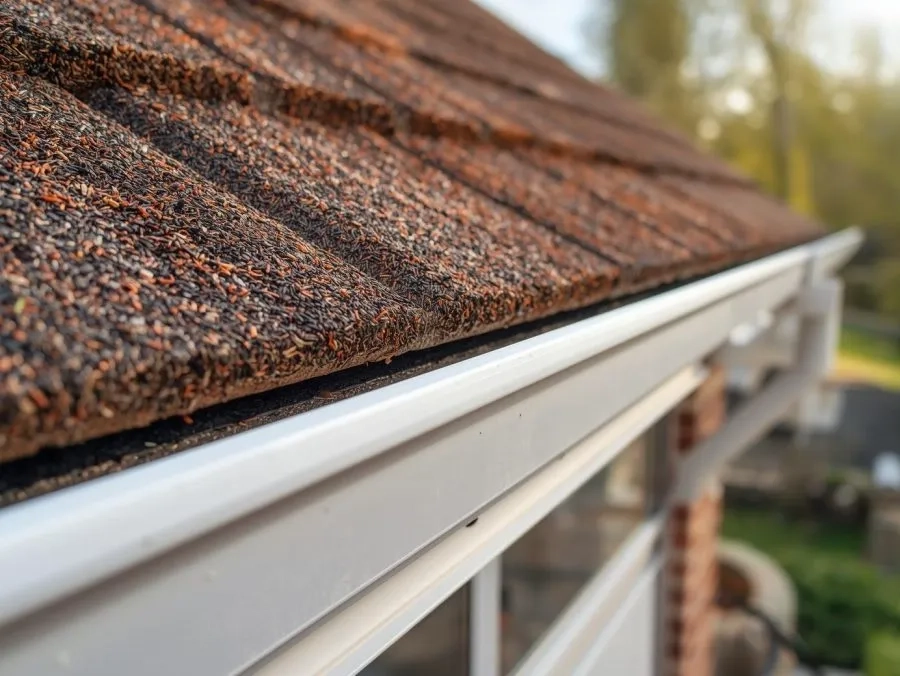
The St. Johns River and Lake Monroe Corridor on Deltona’s Western Boundary
Lake Monroe and the St. Johns River form Deltona’s western boundary, creating near-water table conditions for properties in the western subdivisions adjacent to this corridor. Lake Monroe is the point where the St. Johns River widens into a broad lake before continuing northward through Sanford — a water body large enough that wet-season lake level rise creates meaningful water table elevation in adjacent low-elevation properties.
Western Deltona’s Lake Monroe corridor subdivisions experience the same seasonal near-lake drainage dynamics described for Sanford’s downtown lakefront neighborhoods on the opposite shore. The GDC-era housing stock in these western subdivisions carries both the aging mechanical system condition and the near-lake drainage concern, with the additional note that the St. Johns River’s influence on water levels in Lake Monroe can create more sustained wet-season water table elevation than smaller enclosed lakes elsewhere in Deltona’s network.
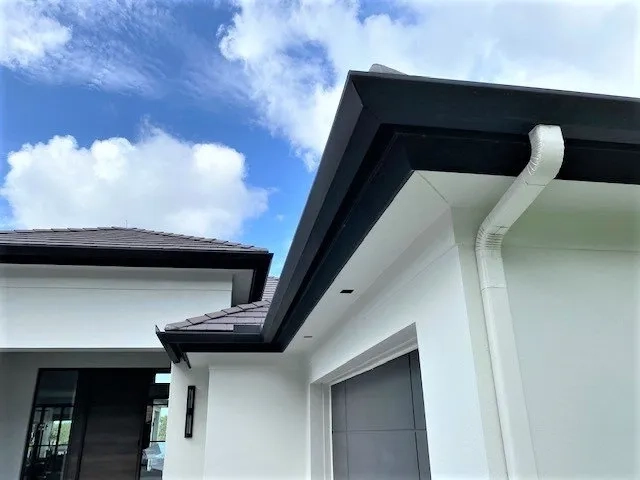
Later-Era Construction in Northeastern Deltona and the Debary Border Communities
While the GDC-era housing stock dominates Deltona’s residential character, the northeastern portions of the city toward the Debary and Orange City border and infill development throughout the city include homes from the 1990s and 2000s. These later-era homes have the builder-spec valley overflow pattern seen across the broader Central Florida market — 5-inch sectional gutter systems at hip-roof convergence points that overflow during peak wet-season events.
The assessment approach for 1990s–2000s Deltona homes differs from the GDC-era stock: the primary concern is valley convergence point overflow rather than the triple-failure aging pattern, and targeted 6-inch valley section replacement with additional outlet placement is typically more appropriate than the full system assessment that GDC-era homes require.
Four Failure Patterns Most Common on Deltona Property Assessments
Deltona’s GDC-era housing concentration, extensive lake network, St. Johns River western corridor, and Volusia County pine and oak canopy produce specific recurring failure conditions.
Triple-Failure Pattern — GDC-Era Homes
Original hangers loosened through 40–60 years of Florida heat cycling, original 2×3 downspouts undersized by current standards, and open sectional joints appear together on virtually every GDC-era Deltona home. When all three are present, cumulative repair cost approaches replacement cost while leaving the system at continued risk. Full system assessment determines the most cost-effective 10-year path.
Near-Lake Foundation Saturation
Low-elevation lake-adjacent properties throughout Deltona’s 90-plus named lake network experience seasonal water table elevation during June–October. Grade-level downspout discharge that percolates adequately in dry season sits against aging foundations during peak wet season. The combination of aging concrete block foundations and active wet-season water table elevation creates a compounding risk standard elbows cannot adequately address.
Fascia Deterioration Behind Aging Gutters
Backward-pitching gutters on GDC-era homes have been directing water against wood fascia boards for decades. By the time the gutter is visibly separating, the wood behind it has typically deteriorated well beyond the visible failure span. Installing new hardware into deteriorated fascia produces a system that fails at the same location within one to two storm seasons. Fascia assessment is a prerequisite on every GDC-era estimate.
Pine Needle Compression at Downspout Inlets
Longleaf pine, slash pine, and sand pine common in Volusia County’s sandy uplands produce long needles that mat and compress at downspout inlet transitions — restricting effective outlet diameter by 50 to 80 percent before the restriction is visible from the ground. Pre-wet-season cleaning specifically addressing inlet condition is essential on Deltona pine-canopy properties, particularly those with the additional near-lake drainage vulnerability.
Gutter and Drainage Services for Deltona and Volusia County
Each service addresses conditions specific to Deltona’s GDC-era aging housing stock, 90-plus lake network, St. Johns corridor, or Volusia County residential properties.
Deltona Neighborhoods and Volusia County Communities We Serve
Deltona’s GDC-era subdivisions are named for the lakes they were platted around. Lake proximity and construction era are the two primary variables in every estimate assessment.
Schedule a Deltona Estimate
We serve all Deltona neighborhoods and surrounding Volusia County communities including Debary, Orange City, Edgewater, and the Lake Monroe corridor. Every estimate identifies the construction era and lake proximity of the property.
Orlando Office:
4677 LB McLeod Rd, Ste. B, Orlando FL 32811
(407) 203-1144
How We Work in Deltona and Volusia County
Construction Era First, Lake Proximity Second — Two Variables That Determine Every Deltona Assessment
Deltona’s market requires two pieces of information before any other assessment can begin: what decade was the home built, and is it adjacent to one of the city’s 90-plus named lakes? These two variables determine the primary drainage concerns and the appropriate assessment approach for each property.
For GDC-era 1960s through 1980s homes — the dominant segment — the construction era tells us that loosened hangers, undersized downspouts, open joints, and deteriorated fascia are likely present in combination. The assessment evaluates the actual degree of each condition to determine whether targeted repair or seamless replacement is the cost-effective 10-year answer. For lake-adjacent properties in any era, the lake proximity tells us that wet-season water table elevation during June through October creates the near-lake discharge planning question — and that grade-level elbows may not be adequate for the lowest-elevation outlets during peak wet season.
For 1990s and 2000s homes in Deltona’s newer portions, the era tells us the valley overflow assessment is the starting point rather than the aging hanger pattern. We fabricate seamless gutters on-site from continuous aluminum coil stock. Downspout sizing is corrected from original 2×3 to 3×4 on GDC-era homes where undersizing contributes to overflow. The assessment from the estimate travels to the installation crew without loss.
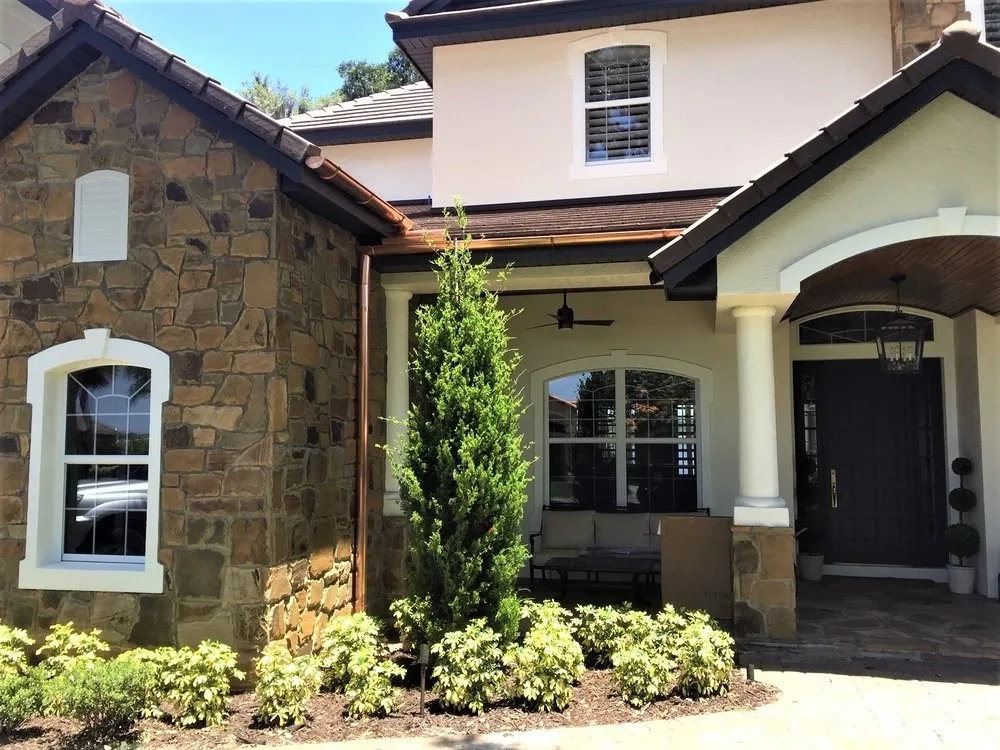
How We Work
From Estimate to Installation
Five steps between your free estimate and a correctly specified gutter system for your Deltona or Volusia County property.
Era & Lake Assessment
Construction decade and lake proximity — the two Deltona-specific variables. GDC-era homes get triple-failure assessment; newer homes get valley assessment; lake-adjacent homes get discharge planning evaluation.
System Condition Review
Hanger condition, joint separation, downspout sizing, and fascia integrity on GDC-era homes. Valley convergence mapping on 1990s–2000s homes. Repair vs. replacement determined by actual condition.
Sizing & Discharge Spec
Profile (5″ or 6″), downspout sizing correction (2×3 to 3×4 where warranted), outlet placement, and discharge routing — including underground components for lake-adjacent properties.
On-site Fabrication
Seamless gutters formed from continuous aluminum coil stock to exact roofline dimensions — no pre-cut section joints, eliminating the thermal-cycling joint failures universal in GDC-era Deltona sectional systems.
Install & Flow Test
Gutters hung at calculated pitch, downspouts connected to grade-level or underground discharge as specified, flow tested before the crew leaves.
Why Standard Elbows Are Often Inadequate on Low-Elevation Lake-Adjacent Deltona Lots During Wet Season
Standard grade-level downspout elbows perform adequately on Deltona properties on higher ground with good-draining Volusia County sandy soils — and during the dry season, even low-elevation lake-adjacent lots often have adequate percolation from grade-level discharge. The problem that changes the answer for near-lake Deltona properties is seasonal: as lake levels rise through the June to October wet season, the water table in adjacent low-elevation lots rises with them. By August and September at peak wet season, the soil column between the surface and saturation may be only 12 to 18 inches deep on the lowest-elevation lots adjacent to larger Deltona lakes.
In this condition, downspout discharge that appeared to percolate adequately in June sits against the foundation perimeter. On GDC-era homes with aging concrete block construction, this is a foundation condition built 40 to 60 years ago without the benefit of modern moisture management expectations. Underground drainage runs that capture downspout discharge and route it through buried pipe to a pop-up emitter remove the water from the foundation-perimeter zone regardless of seasonal water table height. See our underground drainage page for system configuration detail.
Lake Network Emitter Runs
Buried pipe from downspout outlet to a pop-up emitter in the yard — for low-elevation lots adjacent to Deltona’s named lakes where wet-season water table elevation reduces grade-level percolation at foundation-adjacent outlets.
Downspout Upsizing
Replacing original 2×3 downspout outlets with 3×4 sizing on GDC-era homes where original undersizing contributes to overflow during peak Central Florida storm events on homes whose catchment area exceeds the original design assumption.
Lake Monroe Western Drainage
Underground discharge for western Deltona properties adjacent to Lake Monroe and the St. Johns River system — routing water away from aging GDC-era foundations during sustained wet-season water table elevation from the lake-river corridor.
Valley Outlet Addition
Additional outlets placed at hip-roof valley convergence points on 1990s–2000s Deltona homes — addressing builder-spec overflow at combined-flow valley locations without requiring full system replacement where the rest of the installation is functional.
Residential Gutter Systems for Deltona and Volusia County
GDC-Era Residential (1960s–1980s)
The dominant Deltona market segment — concrete block homes across Deltona Lakes, Lake Doyle, Saxon Park, Lake McCoy, Lake Benson Hills, and dozens of other GDC-named subdivisions.
Newer Residential (1990s–2000s)
Later-era Deltona homes in the northeastern area, Debary border communities, and infill development — different primary failure mode from GDC-era stock.
Commercial & Near-Daytona
Deltona Boulevard and Saxon Boulevard commercial strip, multifamily, and commercial properties serving Volusia County’s inland residential market.
What Deltona and Volusia County Customers Say
Professionalism
The first home repair team in a long time that did what they promised and on time. I would recommend Hank’s. We had a whole house gutter and downspout replacement after the March hail storm in 2023.

Highly Recommended!
Dealt with Precision Gutters on a complex custom project, fixing an issue caused by a bad contractor. They worked tirelessly with me and went over every detail to help me come up with the best solution.
Premium Quality
Very professional and on time installation highly recommend thank you for your service!
Knowledgeable
I contracted Precision Gutters LLC to do the drainage for the gutters. They are professional, punctual, great attitude, knowledgeable, respectful personally.
I highly recommend Precision Gutters LLC as a company & their skills workers. Every message I sent to the Sales Representative Marc Marchand was answered in a timely manner & to the point.
Gutter Installation, Aging System Replacement, Cleaning, and Lake Drainage in Deltona
Frequently Asked Questions — Deltona Gutter Services
Why do so many Deltona homes need gutter replacement at the same time?
Deltona was developed almost entirely by the General Development Corporation through mail-order lot sales from the late 1950s through the 1980s, creating a city whose primary housing stock was built in concentrated waves through the 1960s, 1970s, and 1980s. The result is a city of roughly 100,000 people whose dominant residential stock is 40 to 65 years old. Original spike-and-ferrule hanger systems, 2×3 downspouts, and sectional gutter joints from this era appear in combination on the same properties rather than as isolated failures. When all three conditions are present together, the cumulative repair cost approaches replacement cost. Full system assessment determines the most cost-effective 10-year path for each property.
How does Deltona’s lake network affect drainage for adjacent properties?
Deltona has over 90 named lakes within city limits, and many were incorporated into original GDC subdivision plats specifically to create desirable lakefront lots. During the June through October wet season, lake levels rise with rainfall accumulation and the water table in adjacent properties rises with them. On low-elevation lake-adjacent lots, grade-level downspout discharge that percolates adequately in the dry season sits against foundation perimeters for extended periods during peak wet season. The combination of aging concrete block foundations from the GDC era and active wet-season water table elevation creates a compounding condition that standard downspout elbows cannot adequately address on the lowest-elevation lake lots.
What gutter conditions should I expect on a 1960s–1980s Deltona concrete block home?
GDC-era Deltona homes from the 1960s through the 1980s share a nearly universal set of gutter conditions: original spike-and-ferrule hangers loosened through 40 to 60 years of Florida heat cycling, allowing gutters to pitch backward and pond water against the fascia; original 2×3 downspouts undersized for current Central Florida rainfall intensity standards; sectional gutter joints opened through decades of thermal movement; and wood fascia boards that have often deteriorated behind aging gutters from chronic water contact. When all four conditions appear together — which is typical — installing new hardware without addressing the fascia and sizing issues produces a new system that fails at the same locations within one to two seasons. Full assessment determines whether targeted repair or seamless replacement is correct for the specific property.
How does Lake Monroe affect western Deltona properties?
Lake Monroe and the St. Johns River form Deltona’s western boundary, creating near-water table conditions for properties in the western subdivisions adjacent to this corridor. Lake Monroe is the point where the St. Johns River widens into a broad lake before continuing northward through Sanford — large enough that wet-season lake level rise creates meaningful water table elevation in adjacent low-elevation properties. Western Deltona’s Lake Monroe corridor subdivisions experience the same seasonal near-lake drainage dynamics described for Sanford’s downtown lakefront neighborhoods across the water. The GDC-era housing stock in these western subdivisions carries both the aging mechanical system condition and the near-lake drainage concern simultaneously.
Are there newer Deltona homes with different gutter failure patterns?
Yes. While the GDC-era stock is dominant, Deltona has newer residential development from the 1990s through 2010s — particularly in the northeastern area toward Debary and Orange City and in infill developments. Homes from the 1990s and 2000s have the builder-spec valley overflow pattern seen across the broader Central Florida market: hip-roof configurations where 5-inch sectional systems overflow at valley convergence points during peak wet-season events. These newer homes need valley assessment rather than the full triple-failure aging assessment appropriate for GDC-era stock.
How often should Deltona homes with pine canopy be cleaned?
Most Deltona properties benefit from gutter cleaning at least twice annually — pre-wet-season in April or May and post-fall in November. Properties with significant longleaf pine, slash pine, or sand pine canopy may need downspout inlet inspection mid-season given the pine needle compression rate. Long pine needles mat and compress at inlet transitions, restricting effective outlet diameter by 50 to 80 percent before the restriction is visible from the ground. Pre-wet-season cleaning is the most critical interval for all Deltona properties — and especially for pine-canopy lake-adjacent properties where entering wet season with restricted inlets compounds both the drainage capacity concern and the near-lake water table discharge challenge.
How is Deltona’s lake network different from Lakeland’s for drainage purposes?
Deltona has more than twice as many named lakes as Lakeland within city limits, meaning a higher proportion of the total residential inventory is within near-lake drainage influence. More significantly, in Lakeland the near-lake properties are often among the more recently built homes; in Deltona, the near-lake properties are predominantly the same 40 to 65-year-old GDC-era concrete block homes as the rest of the city, meaning they carry both the near-lake drainage concern AND the aging mechanical system condition simultaneously. Deltona’s lakes are also managed under standard Florida stormwater guidelines rather than active restoration watershed protections like Lake Apopka or Winter Park’s chain — so discharge routing requires appropriate management but doesn’t carry the same environmental constraint as more sensitive lake systems elsewhere in the network.
Does Precision Gutters serve commercial properties in Deltona?
Yes. We install commercial gutter systems on retail and service commercial properties along Deltona Boulevard and Saxon Boulevard, on multifamily apartment and townhome communities throughout the city, and on any institutional or commercial property in Deltona and the surrounding Volusia County area. Commercial buildings require individual catchment area assessment rather than residential specification applied at larger scale. We also serve the Debary, Orange City, and Lake Helen communities adjacent to Deltona with similar residential stock age profiles and drainage conditions.
Other Cities We Serve Near Deltona
Stop Water Problems Before They Reach the Foundation
Deltona’s GDC-era 1960s through 1980s housing stock is the most concentrated aging gutter market in the Central Florida service area — and the 90-plus named lake network means a significant share of those aging homes also have near-lake water table conditions that change the discharge planning equation.
Free estimates identify the construction era and lake proximity of your property, evaluate the actual condition of your gutter system, and determine whether targeted repair or seamless replacement is the correct answer for your specific home.
Other Florida Locations